
Some conversations end when the words stop. Others continue inside your body. You replay the exchange, rehearse what you should have said and carry an emotional weight that did not seem to belong to you before the call began.
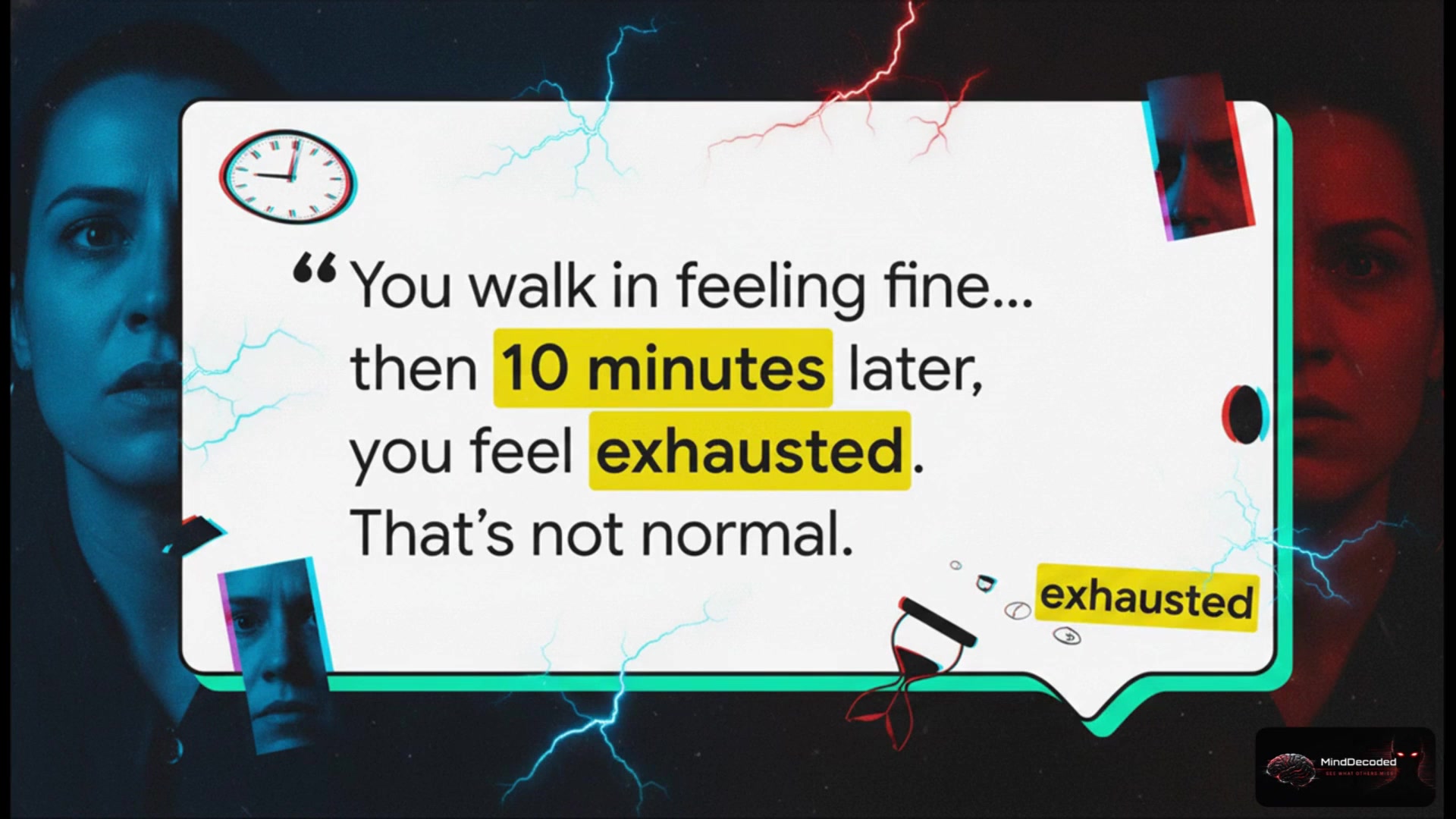
People often describe this as having their “energy drained.” The phrase captures the experience, but it can hide the mechanisms. Nothing supernatural needs to be happening. Listening, regulating emotion, monitoring threat and solving another person’s problems all require attention. When those demands become intense, repetitive or one-sided, fatigue is a predictable result.
That does not automatically make the other person malicious, narcissistic or “toxic.” A single exhausting conversation may reflect grief, crisis, your own depleted capacity or a poor moment between two decent people. What matters is the recurring pattern: what the interaction asks from you, whether consent and reciprocity exist, and what happens when you set a limit.
You may feel exhausted after talking to someone because you are absorbing emotional cues, repeatedly regulating your own reactions, scanning for criticism, co-ruminating on unresolved problems or carrying responsibility the other person has shifted onto you. The useful question is not “Are they an energy vampire?” but “What work am I doing in this interaction, and is it mutual?”
Feeling drained is real—even when the explanation is not mystical
Human nervous systems are social. During conversation, we read facial expressions, voice, posture and timing. Research on emotional contagion describes the tendency to mimic or synchronise with emotional cues and sometimes converge toward another person’s state. If someone arrives highly activated, you may leave more activated too.
Regulation adds another layer. Perhaps you suppress irritation, choose every word carefully or try to calm the other person while appearing calm yourself. Reviews of emotion regulation note that sustained, deliberate regulation can require cognitive effort and contribute to subjective fatigue. The exhaustion may therefore be the cost of invisible labour rather than proof that the person “stole” something from you.
Your condition before the interaction matters. Poor sleep, illness, burnout, sensory overload, social anxiety and depression can all reduce available capacity. If many ordinary conversations leave you unusually exhausted, consider the broader picture and seek professional assessment when fatigue is persistent or interferes with daily life.
Five mechanisms that make a conversation exhausting
1. Emotional contagion: your system starts matching theirs
Humans naturally track other people’s emotions. This helps bonding, cooperation and empathy. It can also increase arousal when the other person communicates anger, panic or despair. Closeness, attention and repeated exposure can intensify the effect, although people differ in sensitivity.
Emotional contagion is not necessarily manipulation. It may happen without either person noticing. The practical distinction is whether both people can regulate, pause and return to balance—or whether one person repeatedly uses the other as the only place to discharge distress.
2. Co-rumination: connection becomes a loop
Talking through a problem can bring insight and support. Co-rumination goes further: the same causes, consequences and negative feelings are examined repeatedly without movement toward acceptance, action or rest. Research links co-rumination with closeness in some relationships, but also with distress and prolonged stress responses.
The conversation feels intimate because disclosure is deep, yet both people may finish more activated. A useful pivot is: “Do you want comfort, ideas or help making a decision?” If no form of support changes the loop, pause rather than providing another hour of analysis.
3. Hypervigilance: you monitor the person instead of participating
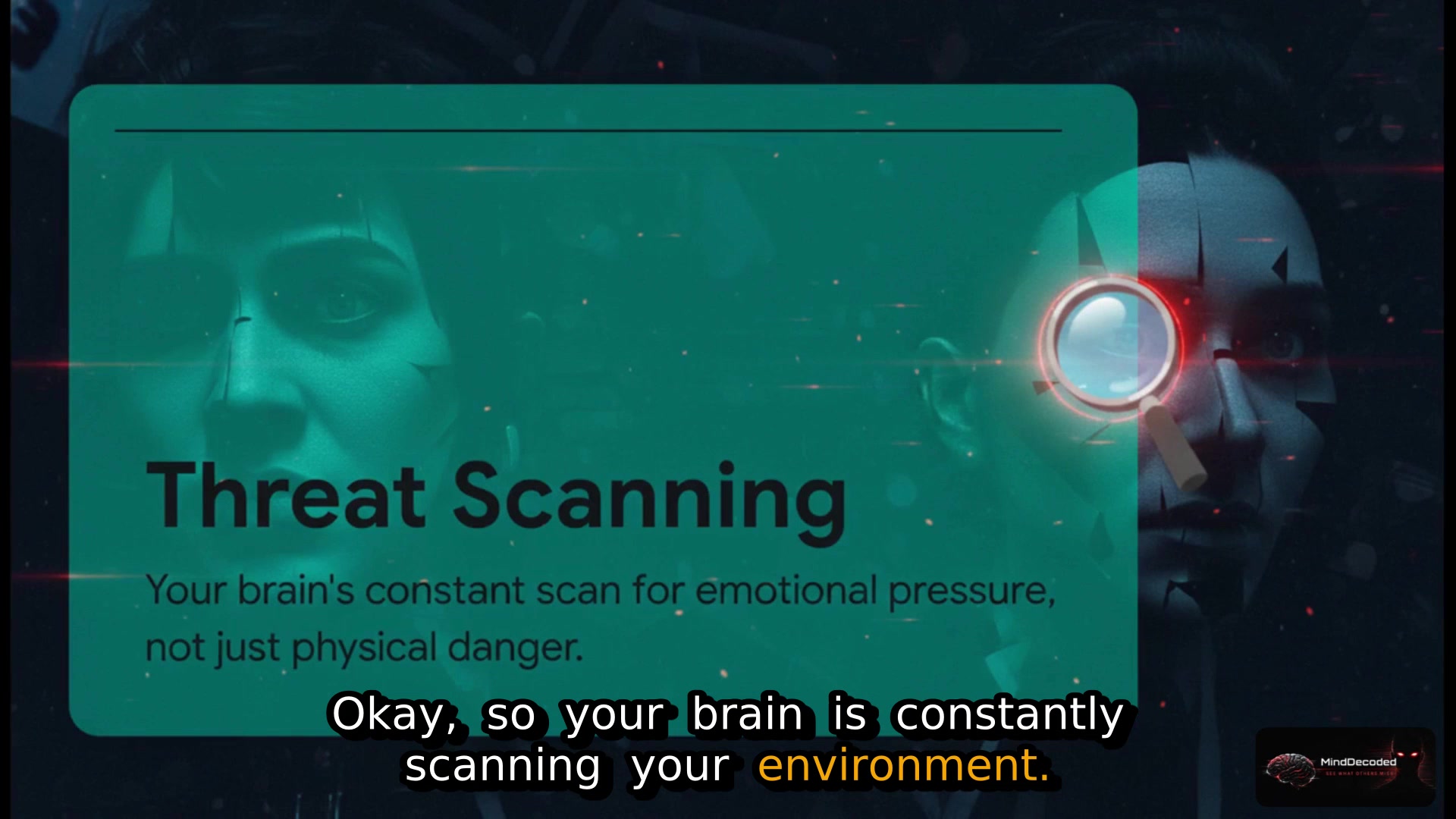
Some interactions require constant threat scanning. You watch tone, facial tension and pauses for signs that a harmless sentence may trigger criticism, withdrawal or rage. Attention splits: one part follows the discussion, while another predicts danger and edits you in real time.
This pattern can emerge after repeated unpredictable reactions. It can also appear because of earlier experiences or anxiety, even when the present person is not threatening. Look for concrete behaviour and repeated context before deciding where the risk comes from.
4. Emotional labour: you manage two nervous systems
You may become translator, mediator, reassurance provider and mood manager. You soften every truth, prevent every silence and rescue the other person from discomfort. Because this work is mostly internal, the relationship can look equal while you perform most of the regulation.
Support is part of healthy relationships. The warning sign is chronic asymmetry: your feelings are postponed, their urgency sets the agenda and your role cannot change without punishment. Care becomes a job you never agreed to take.
5. Responsibility transfer: their problem becomes your assignment
A person can share pain while retaining ownership: “I am struggling, and I would appreciate you listening.” Responsibility transfer sounds different: “If you really cared, you would fix this,” or “Now I feel worse because you did not respond correctly.” The listener is made accountable not only for kindness, but for the speaker’s entire emotional outcome.
Empathy means taking another person’s experience seriously. It does not mean guaranteeing relief, accepting abuse or solving problems outside your control.
The exhaustion is often the receipt for invisible work: monitoring, absorbing, explaining, soothing and preventing reactions that were never fully yours to manage.
How to read the pattern without unfairly labelling someone
Begin with your body, but do not end there. Notice what changes: jaw tension, mental fog, headache, racing thoughts, heaviness or the urge to escape. Then identify the interactional demand that preceded it.
Ask whether the conversation had consent. Did the person check if you had capacity, or begin an intense disclosure without warning? Was there reciprocity? Could your experience enter the room? Did the discussion move somewhere, or repeat? Most revealingly, what happened when you tried to pause?
A disappointed but respectful response suggests strain within a workable relationship. Mockery, guilt, threats, escalating contact or punishment for a basic limit suggest a control problem. Evaluate several interactions rather than one emotionally charged event.
Also test alternative explanations. Do you feel drained around groups, noise or all conflict? Were you already exhausted? Are you masking, performing or hiding an important part of yourself? The most accurate answer may involve both the relationship and your current capacity.
Boundaries that protect connection instead of ending it
A boundary is not “Stop having problems.” It defines your availability and behaviour. Specific limits are kinder and more usable than vague withdrawal:
- “I can listen for 20 minutes, but I cannot stay on the phone all evening.”
- “I care about you. I do not have the bandwidth for this tonight. Can we talk tomorrow?”
- “We have gone over this several times. Do you want comfort, a practical next step or a change of subject?”
- “I am willing to discuss the issue, but not while I am being shouted at.”
- “I cannot be your only support for this. A counsellor may be better equipped to help.”
Do not over-explain. A long defence turns capacity into a debate. State the limit, offer a realistic alternative if you want to, and follow through. The other person may still feel disappointed. The success of a boundary is not measured by whether everyone likes it.
Reciprocity can also be invited directly: “I want to share something from my week too.” Healthy connection can tolerate that shift. If every attempt to include your needs is redirected back to the other person, the pattern becomes clearer.
How to recover after a heavy conversation
Name what belongs to you
Write two columns: “Mine” and “Theirs.” Your tone, choices and commitments belong to you. Their mood, interpretation and next action belong to them. The exercise interrupts responsibility transfer without denying compassion.
Give your nervous system a clear ending
Change rooms, take a short walk, stretch, breathe slowly or wash your face. The goal is not a magical reset; it is a concrete signal that the demanding interaction has ended. Avoid immediately replaying the entire conversation with someone else.
Replace rumination with one decision
Ask: Is there a repair I genuinely owe? Is there a boundary I need next time? Is there nothing to do tonight? Choose one answer. Repeated analysis feels productive while keeping the stressor psychologically present.
Adjust exposure based on evidence
Not every difficult relationship requires total cutoff. You might shorten calls, meet in public, avoid certain subjects, reduce frequency or stop responding immediately. If the person repeatedly violates limits or you feel unsafe, greater distance and outside support may be appropriate.
Compassion works better with edges
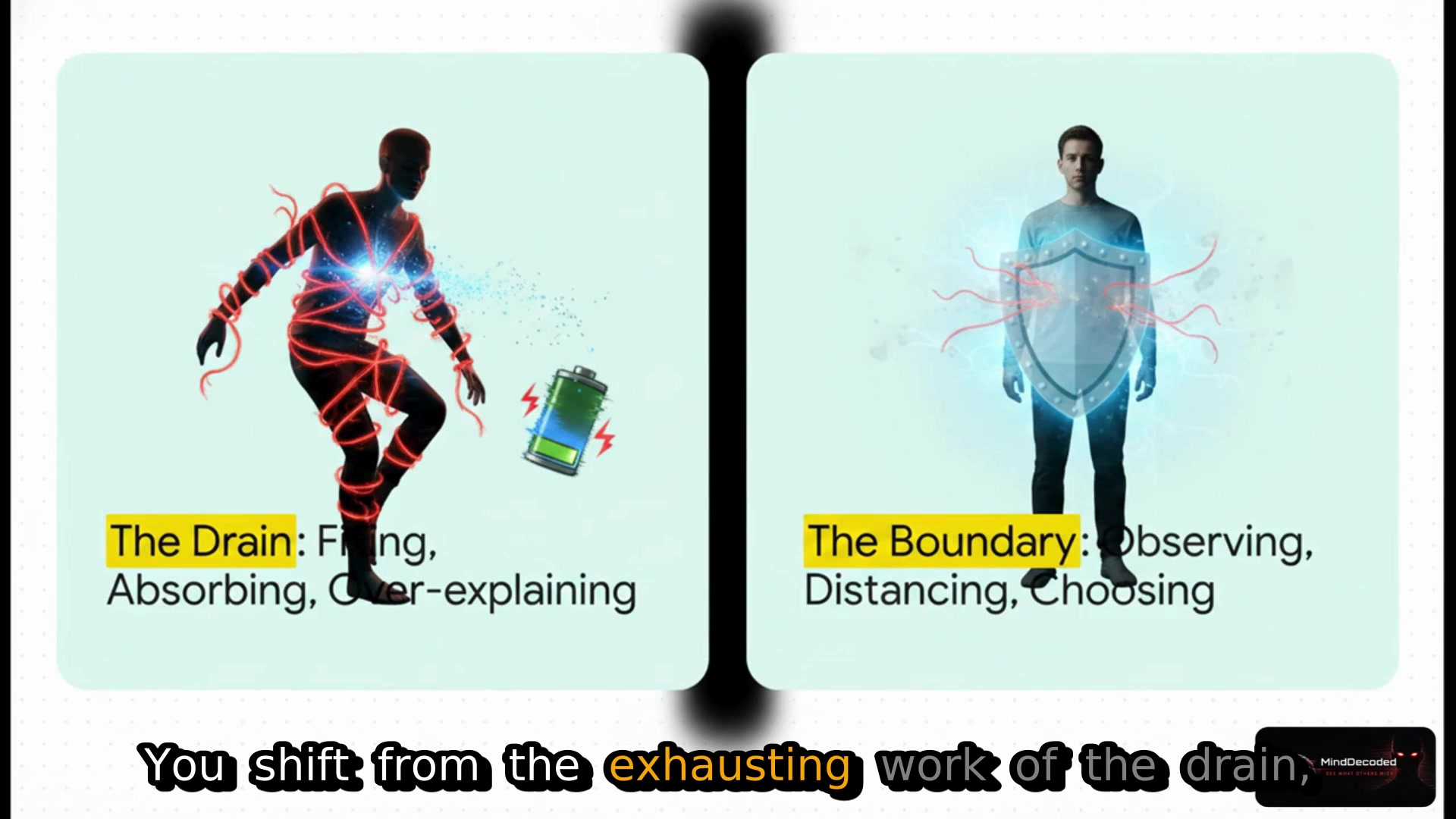
Listening is valuable. Mutual regulation is part of intimacy. But support that depends on one person endlessly absorbing and the other endlessly discharging will eventually damage both. Boundaries do not remove compassion; they give it a sustainable shape.
The next time you leave a conversation depleted, resist the fastest labels. Slow down and identify the work. Were you matching distress, managing reactions, revisiting the same problem, scanning for danger or carrying responsibility? Once the mechanism is visible, you have choices: clarify the purpose, limit the time, refuse disrespect, invite reciprocity or step away.
You do not need to prove that someone is bad before protecting your capacity. The effect of a pattern matters, even when intent is uncertain. And you do not need to abandon care in order to stop carrying what is not yours.
Watch the original video
See the MindDecoded visual breakdown of emotional contagion, threat scanning, one-sided dumping and the boundary shift that interrupts the drain.
Watch on YouTube ▶Frequently asked questions
Why do I feel exhausted after talking to someone?
A conversation can require sustained attention, emotional regulation, threat monitoring or repeated problem processing. Emotional contagion and co-rumination may also keep your stress response active after the interaction ends.
Does feeling drained mean the other person is toxic?
No. Fatigue is a clue about the interaction, not a diagnosis of the person. Context, your health, social anxiety, sensory load and the relationship pattern all matter.
What is emotional dumping?
Emotional dumping is a common non-clinical term for one-sided, repetitive disclosure that ignores the listener’s capacity or consent and seeks release without mutual exchange or movement toward coping.
How can I set a boundary without being unkind?
Acknowledge the person, name your capacity and offer only what you can genuinely give: “I care about you, but I do not have the bandwidth for this conversation tonight. Can we check in tomorrow for 20 minutes?”
Sources and further reading
Important: This article is educational and does not diagnose a person or relationship. Persistent fatigue can have psychological or physical causes that deserve professional assessment. If an interaction involves threats, coercion, stalking or fear for your safety, seek support from a qualified local service.