You remember the lies. The sudden coldness. The nights spent replaying a conversation because you could no longer tell whether your memory was trustworthy. You promise yourself that the next time will be the last. Then a message arrives, their familiar warmth returns, and the certainty you felt yesterday begins to dissolve.
This contradiction can be deeply confusing: if a relationship is painful, why does distance from it hurt so much? Why can one kind moment outweigh a week of anxiety? Why do intelligent, self-aware people return to someone they know is harming them?
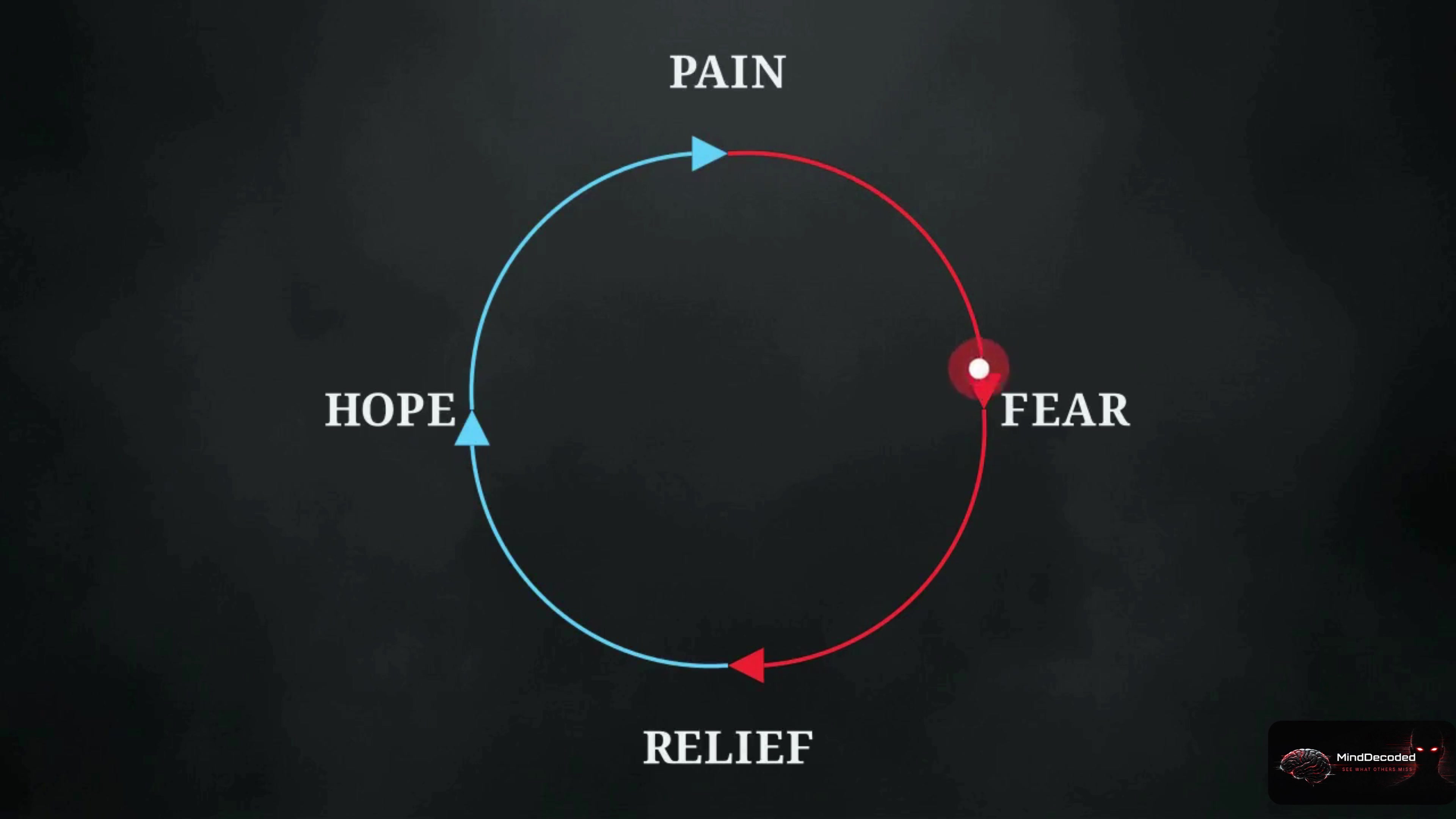
The answer is not that they enjoy suffering, lack willpower or secretly want the chaos. In some controlling relationships, attachment is strengthened by the same cycle that causes the distress. The person who creates the wound also becomes the person who temporarily removes it. Fear is followed by relief; rejection by affection; uncertainty by a sudden promise. Over time, the nervous system can begin to read the end of pain as evidence of love.
It can be difficult to leave a narcissistic or emotionally abusive partner because intermittent affection, gaslighting, isolation and fear may create a powerful trauma bond. The urge to reconnect can feel like love, but it may also be the nervous system seeking relief from a cycle it has learned to expect.
What is a trauma bond?
A trauma bond is a strong emotional attachment that develops within a relationship marked by an imbalance of power and repeated cycles of harm and reconciliation. The term does not mean that two people bonded because they both experienced trauma. It describes attachment to the person who is also a source of fear, humiliation, coercion or instability.
Not every difficult relationship creates a trauma bond, and not every selfish or insensitive partner has narcissistic personality disorder. A clinical diagnosis belongs to a qualified professional. The more useful question is often not “What label fits this person?” but “What pattern is this relationship creating in me?”
Look at the whole pattern. Do you feel increasingly unable to trust your judgment? Are boundaries treated as betrayal? Does affection appear most intensely after cruelty, withdrawal or threats? Do you spend more energy preventing the other person’s reactions than living your own life? A single argument cannot answer these questions. Repetition can.
The cycle that turns relief into love
Stable affection is emotionally quieter than unpredictable affection. When care is dependable, your nervous system does not need to scan constantly for its return. In a destabilising relationship, warmth may arrive without warning and vanish just as quickly. A loving message follows days of silence. An apology appears after a brutal argument. The “good version” of the person returns just as you are ready to leave.
This is intermittent reinforcement: a reward delivered unpredictably. Because the next positive moment cannot be predicted, attention becomes locked onto the possibility of receiving it. You search for the perfect words, the correct mood and the behaviour that might bring the warmth back. The question quietly changes from “Is this relationship consistently safe?” to “What must I do to make it safe again?”
The early intensity of the relationship can make the cycle even stronger. Constant attention, rapid intimacy, mirrored interests and dramatic promises may create a powerful emotional anchor. Later, you compare present harm with the beginning and assume the original person is still hidden somewhere underneath. You are no longer only attached to who they are. You are attached to the possibility of recovering who they appeared to be.
You do not miss the pain. You miss the version of them that appeared whenever the pain temporarily stopped.
During conflict, the body can enter hypervigilance. You monitor facial expressions, tone, footsteps and silence for signs of danger. When affection returns, tension falls sharply. That drop can produce an intense emotional high. But relief is not the same thing as intimacy. One is the temporary absence of threat; the other is connection that does not require fear as an entrance fee.

How your reality is slowly rewritten
A trauma bond is rarely maintained by affection alone. It often grows stronger as self-trust becomes weaker. If your memory is repeatedly questioned, your emotions dismissed and your boundaries reframed as cruelty, every decision must pass through a mind filled with manufactured doubt.
Disagreement is not automatically gaslighting. Two people can remember an event differently without either one deliberately manipulating the other. Gaslighting is better understood as a systematic pattern: facts are denied, small details are distorted, harmful behaviour is minimised, and your emotional reaction is used as proof that you are irrational.
Over time, you may enter conversations already prepared to be wrong. You explain why something hurt; then you defend your right to feel hurt; finally, you apologise for the way you explained it. The original behaviour disappears from the discussion. Your reaction becomes the offence, while the action that triggered it is presented as reasonable.
This creates cognitive dissonance. You believe the person loves you, yet the same person repeatedly harms you. Holding both realities is painful, so the mind searches for an explanation that preserves hope. Self-blame can provide an illusion of control: if you caused the problem, perhaps you can fix it. Accepting that the relationship may be unsafe is more frightening because it requires action under uncertainty.
Isolation intensifies the distortion. Friends and relatives are described as jealous, negative or incapable of understanding the connection. Eventually, avoiding them feels easier than defending them. Once outside reference points disappear, the controlling partner’s interpretation of reality faces little competition.
Why leaving can feel worse before it feels better
Physical distance does not produce instant emotional freedom. Interrupting an unpredictable reward cycle can initially make the attachment feel stronger. The mind replays moments of tenderness while minimising the distress around them. You may feel anxiety when there is no contact and panic when contact resumes.
This emotional withdrawal can be misread as evidence that leaving was a mistake. It is not proof that the relationship was healthy. It may be the predictable discomfort of a brain encountering the absence of a familiar pattern. Grief also matters. You are not only grieving a person; you may be grieving the future they promised, the beginning you hoped to recover, and the version of yourself who believed the relationship could still become safe.
Shame makes this stage harder. People outside the relationship may ask, “Why didn’t you just leave?” The question assumes leaving is a single decision. In reality, financial dependence, children, housing, immigration status, disability, threats, surveillance and fear of retaliation can all create material barriers. Emotional conditioning exists inside those practical realities—not instead of them.
How to begin breaking a trauma bond
Recovery is not a performance of indifference. You do not have to prove that you no longer care. The goal is to restore safety, factual clarity and autonomy until emotion no longer controls every decision.
1. Restore the complete record
Nostalgia edits. It highlights relief and removes the distress that made relief necessary. Write down specific events as accurately as possible: what was said, which boundary was crossed, what happened next, and how your body reacted. Keep messages or records where doing so is safe and lawful. The purpose is not to obsess over the past; it is to protect reality from being rewritten during a vulnerable moment.
2. Reduce exposure to the cycle—safely
Where possible, reduce or end contact. If communication is necessary, keep it brief, factual and limited to practical subjects. Distance is not a tactic to provoke pursuit; it is space in which your nervous system can stop responding to constant emotional interruption.
If you fear violence, stalking, retaliation or escalating control, do not announce a plan simply to prove strength. Seek specialist support and develop a safety plan. Safety takes priority over confrontation, closure or winning the final argument.
3. Rebuild outside reference points
Speak with people who can listen without shaming you or forcing an immediate decision. A trauma-informed therapist, domestic-abuse advocate or trusted friend can help identify patterns that isolation trained you to ignore. Each honest conversation introduces another source of reality and reduces the controlling person’s monopoly over your interpretation of events.
4. Expect emotional withdrawal
Prepare for urges rather than treating them as commands. When you want to make contact, identify the trigger: a song, loneliness, guilt, an anniversary, a message or fear about the future. Naming a trigger turns a wave of emotion into information. Delay action, revisit your written record and contact a safe person before responding.
5. Rebuild identity through small choices
Controlling dynamics can train you to seek permission for ordinary preferences. Autonomy returns through repetition. Choose the music. Wear the colour. Restart the hobby. Make a plan without rehearsing someone else’s reaction. These acts can look small, but each one teaches the nervous system that having a preference is not dangerous.

What closure really looks like
You may never receive an honest confession or the apology that makes every contradiction disappear. Waiting for the person who destabilised your reality to validate your reality keeps them in the role of final authority.
Closure can begin before they agree with you. It begins when you stop requiring their permission to believe what you experienced. You can understand someone’s history without accepting responsibility for enduring their behaviour. Compassion does not require access. Forgiveness, if it matters to you, does not require reconciliation.
The bond weakens when relief, safety and identity are no longer tied to the person who repeatedly compromised them. That process may be slow. Missing them does not erase your progress. A difficult day does not cancel a safe decision. Recovery is not the absence of feeling; it is the return of choice.
Watch the original video
See the complete MindDecoded visual breakdown of trauma bonding, gaslighting, emotional withdrawal and the five-step recovery protocol.
Watch on YouTube ▶Frequently asked questions
Why is it so hard to leave a narcissist?
A cycle of fear, uncertainty and intermittent affection can condition the nervous system to experience relief as connection. Gaslighting, isolation and reduced self-trust may then make leaving feel more dangerous or confusing than staying.
Is missing someone proof that the relationship was healthy?
No. Missing a person can reflect attachment, grief, habit or withdrawal from an intense emotional cycle. The feeling is real, but it does not prove that the relationship was safe.
How long does it take to break a trauma bond?
There is no universal timeline. Recovery depends on safety, contact with the other person, access to support, the duration of the relationship and individual circumstances. Progress is often uneven rather than linear.
What is the first step in breaking a trauma bond?
Begin by restoring an accurate record of what happened and seeking a trustworthy outside perspective. Where abuse or retaliation is possible, make safety—not confrontation—the first priority.
Sources and further reading
Important: This article is educational and does not diagnose a person or replace professional care. If you are in immediate danger, contact local emergency services. If you suspect abuse, consider speaking privately with a qualified domestic-abuse service or healthcare professional from a safe device.