
You open an app for a minute and emerge wanting something you had not considered. A conversation ends and you feel guilty, although you cannot identify what you did wrong. Someone contradicts your memory with such confidence that you begin questioning yourself. None of these moments proves manipulation—but each can reveal how decisions are shaped.
Human beings are social, emotional learners. We use other people, familiar claims and immediate feelings as information. That makes cooperation possible and helps us act without analysing every detail. It also creates predictable points of influence.
The dramatic phrase “your mind isn’t yours” works as a warning, not a literal fact. Your mind remains yours. Yet attention can be captured, options can be arranged and emotional costs can be attached to refusal. Autonomy is not the absence of influence; it is the ability to see relevant influences and still choose deliberately.
Your daily decisions can be shaped through repeated claims, algorithmically selected information, social proof, fear and urgency, guilt, gaslighting, and cycles of reward followed by withdrawal. These mechanisms do not guarantee control, and one incident does not establish abuse. Look for repeated patterns, hidden incentives, distorted information and punishment for independent choice.
1. Repetition turns familiarity into apparent truth
A sentence heard repeatedly becomes easier to process. That fluency can be misread as evidence that the sentence is accurate—a well-studied tendency called the illusory truth effect. A large recent meta-analysis found a small but robust increase in perceived truth after repetition across many types of content.
This explains why slogans, rumours and simplified narratives can become persuasive without becoming better supported. The claim starts to feel as though it came from knowledge rather than exposure. Online, the same idea may reach you through several accounts, screenshots and reaction videos. Multiple appearances can look like multiple sources even when they trace back to one unsupported assertion.
Before accepting a familiar claim, ask where you first encountered it and whether apparently separate sources are truly independent. Search for the original document, full interview or underlying data. Familiarity should prompt a source check, not substitute for one.
2. Algorithms curate the reality available to you
A social feed cannot show everything, so it ranks. The ranking system learns from clicks, watch time, pauses, follows and shares. Its goal may be relevance or engagement—not balanced understanding. Content that provokes outrage, fear or fascination can win attention and therefore earn more distribution.
This does not require a secret plan to change your beliefs. A feedback loop is enough. You react to one topic, the system shows more of it, and repeated exposure makes that topic seem common, urgent and socially important. The feed then appears to confirm the worldview it helped construct.
Interrupt the loop deliberately. Use chronological views where available, follow credible sources that disagree with one another, search outside the recommended feed and clear or pause histories when you want a reset. Ask what relevant information the ranking system might be excluding.
3. Social proof makes popularity look like evidence
Other people are useful guides when we lack information. A crowded exit during an emergency or a widely adopted safety practice may offer valuable evidence. But popularity does not prove truth, quality or suitability. Views can be purchased, reviews fabricated and visible majorities selected by the platform.
The US Federal Trade Commission includes false activity messages and deceptive testimonials among digital dark patterns. A message such as “24 people are viewing this” creates social pressure while revealing little about the product itself. Even genuine popularity can reflect early exposure, habit or convenience.
Translate social signals into concrete questions. How was this number produced? Are negative outcomes visible? Does the crowd resemble me in the ways that matter? What independent evidence supports the decision?
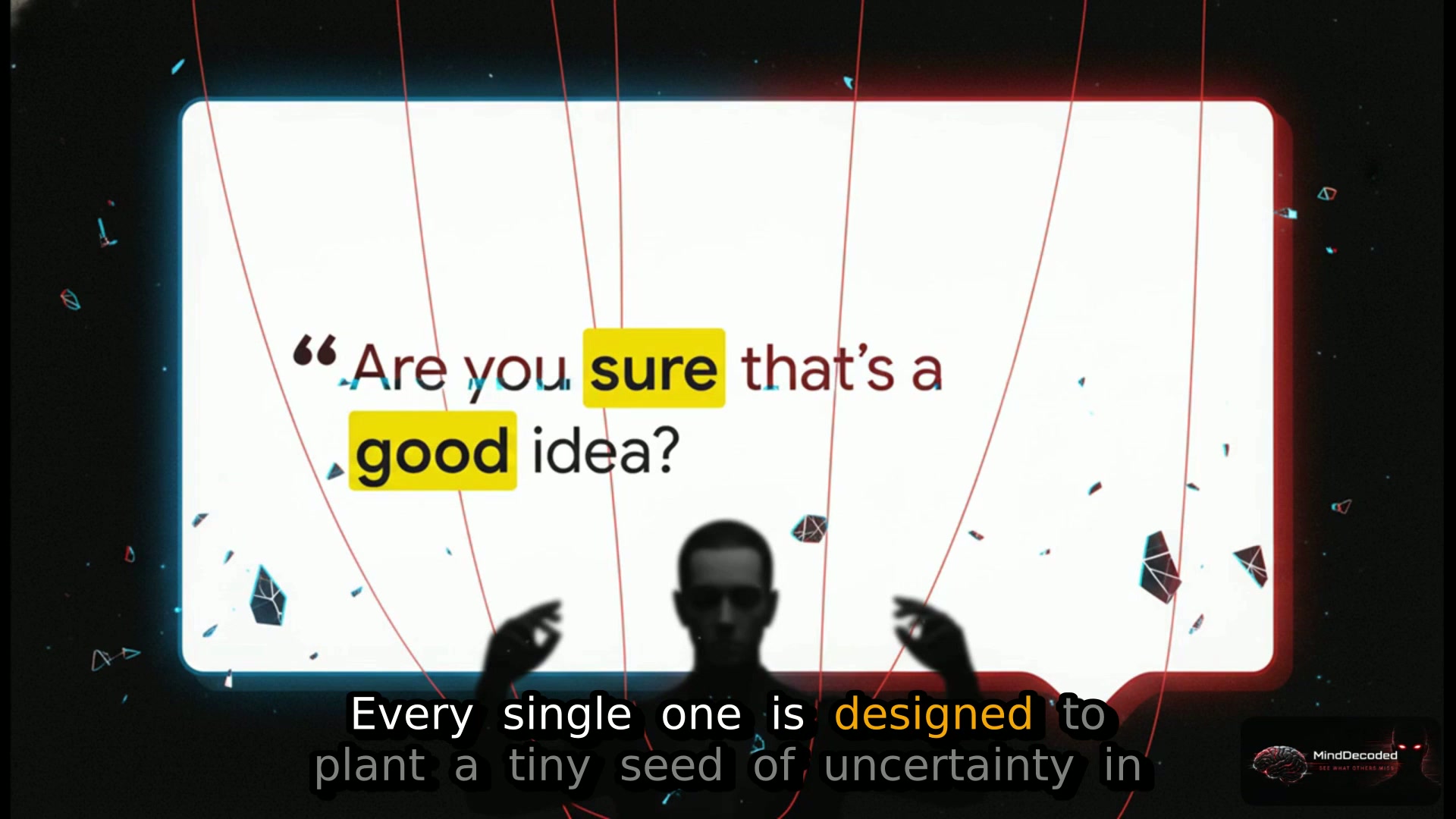
4. Fear and urgency narrow the field of choice
Fear focuses attention on immediate threat. That response can save your life. In ordinary decisions, however, heightened fear may reduce your willingness to explore alternatives or tolerate uncertainty. The question changes from “What is best?” to “How do I make this feeling stop?”
Manipulative messages often combine danger with speed: decide now, respond immediately, do not ask anyone else. Real emergencies exist, but artificial urgency is designed to remove the pause in which doubt, comparison and advice become possible.
Turn emotional urgency into a factual deadline. Ask exactly what happens if you wait an hour or a day. Verify the threat through an independent channel. A bank, employer, government agency or trusted professional will usually allow you to confirm a legitimate request. Pressure not to verify is itself a warning sign.
5. Guilt can convert another person’s wishes into your duty
Healthy guilt follows a specific action that violated your values and points towards repair. A guilt trip is different: it makes you responsible for another person’s mood, sacrifice, silence or disappointment. “After everything I have done for you” turns generosity into an unspoken debt. “I guess I care more” reframes a boundary as cruelty.
The resulting discomfort creates a shortcut. Agreeing seems easier than examining whether the request is fair. Over time, you may volunteer to fix problems you did not create simply to restore emotional peace.
Ask: What exact action am I responsible for? Was the expectation clearly agreed? Would I apply the same standard to someone I love? You can acknowledge another person’s feelings without accepting unlimited responsibility for them. A useful response is: “I understand that you are disappointed. My answer is still no.”

6. Gaslighting shifts trust away from your own perception
Gaslighting is often used loosely to mean disagreement or lying. A more useful definition is a repeated pattern of denying, distorting or reframing another person’s experience in ways that undermine their confidence in their own perception. Phrases such as “You are too sensitive,” “That never happened” or “You always imagine things” can become part of that pattern.
One mistaken memory is not gaslighting. People remember events differently. Look for repetition, power and function. Does the confusion consistently protect the same person from accountability? Are records dismissed whenever they contradict the preferred story? Are you punished for checking?
Ground yourself in contemporaneous evidence: dates, messages, agreements and brief notes written soon after events. Speak with a trusted person outside the dynamic. Avoid endless arguments about your right to have a feeling. You can say, “We remember it differently, but this is the boundary I am setting now.” If you feel unsafe, prioritise support and a safe plan over confrontation.
7. Reward and withdrawal can train pursuit
Attention feels rewarding. Its sudden removal creates uncertainty. When warmth, praise or intimacy alternates unpredictably with distance or criticism, the next positive moment can become unusually compelling. You may work harder, explain more and accept worse treatment in the hope of restoring the earlier connection.
This resembles intermittent reinforcement: unpredictable rewards can maintain behaviour powerfully because each attempt might be the one that succeeds. In relationships, however, the concept should be used carefully. Mood changes and conflict are not automatically a calculated conditioning programme. Again, the pattern matters.
Judge the whole cycle rather than its brightest moment. Track consistency, repair and respect over time. Do not let one intense reunion erase a repeated sequence of withdrawal and distress. Reliable care may feel less dramatic precisely because it does not require you to chase it.
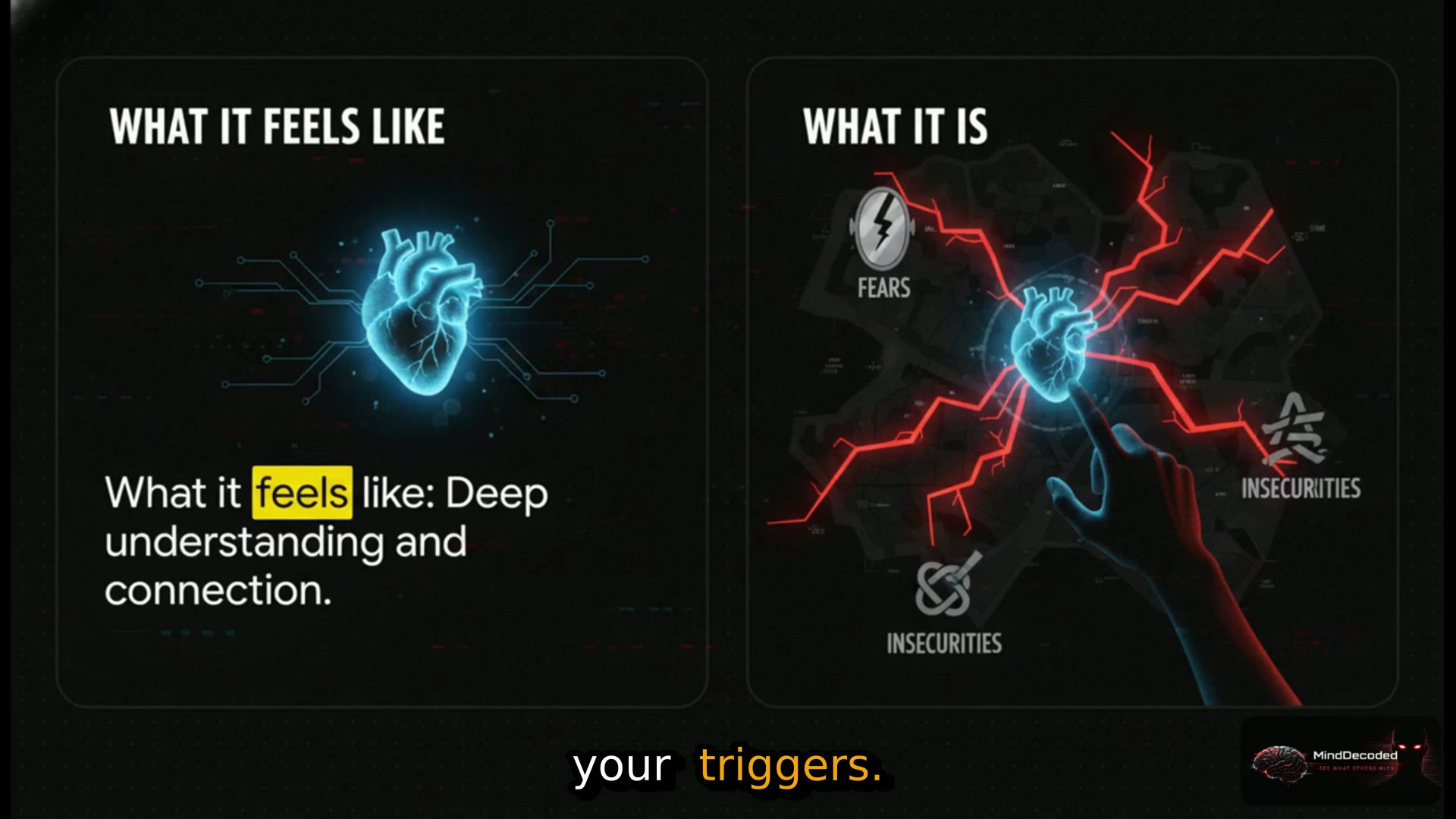
Influence becomes manipulation when the mechanism is hidden, the information is distorted, and independent choice carries a manufactured emotional penalty.
How the seven mechanisms combine
Imagine a creator repeating that the world is dangerous. An algorithm notices your attention and supplies similar clips. View counts make the claim look socially validated. Urgent language keeps you watching. A community implies that doubt is betrayal. Critics are described as confused or malicious. Periodic reassurance then rewards continued loyalty.
No single step needs to be overwhelming. The sequence works by altering the informational and emotional environment around each decision. What you see becomes more familiar; what is familiar feels more plausible; what appears popular feels safer; and leaving begins to feel costly.
The same architecture can appear in unhealthy relationships, aggressive sales funnels, political messaging and online communities. Yet resemblance is not proof of intent. Focus on observable practices: Are claims verifiable? Can you disagree safely? Are alternatives visible? Are mistakes corrected? Can you leave without punishment?
A practical autonomy check
Pause the tempo
Delay decisions that are expensive, irreversible or emotionally charged. A legitimate opportunity may have a deadline, but you should still be able to understand it.
Name the pressure
Write one sentence: “I want to say yes because I fear losing approval,” or “This feels true because I have heard it repeatedly.” Naming the influence separates it from the decision.
Recover the missing options
Add “not now,” “smaller commitment,” “independent comparison” and “leave” to the option set. Manipulation often works by making a false binary feel complete.
Verify outside the frame
Use original sources, full contracts and independent experts. Do not ask only whether a claim is possible; ask how strong the evidence is and what credible alternatives explain the same facts.
Test the freedom to refuse
A healthy request allows a genuine no. Notice retaliation, humiliation, escalating pressure or withdrawal after a boundary. Your right to choose becomes visible in how others respond when you do.
Build a record of consistency
When a relationship or system repeatedly leaves you confused, record events and outcomes. Patterns are easier to evaluate when memory is not competing with the emotion of the latest moment.
Your mind is influenced—but it is not powerless
Total independence is impossible and undesirable. Language, culture, education and relationships shape every person. The goal is not to become suspicious of all influence. It is to distinguish support from pressure, evidence from familiarity and care from control.
Awareness will not make you immune. It gives you something more realistic: a pause. Inside that pause, you can check the source, calm the emotion, restore alternatives and ask whose interests the choice serves.
Your first reaction may be shaped before you notice it. Your next action can still be deliberate.
Watch the original video
See the MindDecoded visual breakdown of hidden influence, emotional pressure and the patterns that can make an outside agenda feel like your own decision.
Watch on YouTube ▶Frequently asked questions
Are all my decisions being manipulated?
No. Every decision is influenced by context, experience, emotion and available information, but influence is not the same as control. The useful question is whether an influence is transparent, accurate and compatible with your interests.
How does repetition influence what I believe?
Repeated statements become easier to process and can therefore feel more familiar and credible. Research calls this the illusory truth effect. Repetition does not make a claim true, so important claims should be checked against original, independent sources.
What is the difference between persuasion and manipulation?
Persuasion presents reasons while preserving meaningful choice. Manipulation commonly hides relevant information, distorts reality, exploits vulnerability or imposes emotional costs for refusing. Real situations exist on a spectrum, so examine patterns and consequences rather than relying on a single label.
How can I protect my decisions?
Slow high-stakes choices, separate facts from emotional pressure, verify claims outside the original source, ask what happens if you say no and consult someone who has no stake in your answer.
Research and further reading
- Systematic review and meta-analysis of the illusory truth effect
- American Psychological Association consensus statement on misinformation
- US FTC report: Bringing Dark Patterns to Light
- Review of social comparison processes in daily life
- NHS guidance on domestic violence, emotional abuse and seeking help
Note: This article provides general education, not a diagnosis or assessment of a specific person. If a relationship involves threats, coercion or fear for your safety, seek confidential support from a qualified local service and use a safe device where appropriate.