A box is already ticked, so you leave it alone. Thousands of people bought a product, so it must be good. You keep a bad investment because selling would make the loss feel real. You search for proof that you were right. Then a countdown timer appears, and suddenly there is no time to think.
These moments feel unrelated, yet they share a structure. Your brain is trying to make a complex decision quickly. It relies on familiar signals—what is already selected, what other people are doing, what might be lost, what confirms an existing belief and what appears scarce. Usually this efficiency is useful. Under the wrong conditions, it becomes a trap.
Calling these patterns “traps” does not mean every influence is malicious. A restaurant displaying its popular dish may simply help uncertain customers. A real deadline can protect a seller from unlimited commitments. The problem begins when a shortcut replaces the question you actually need to answer: Is this choice right for me, given the evidence and the consequences?
Five common psychological traps influence daily decisions: the default effect makes a preselected option feel correct; social proof makes popularity look like evidence; loss aversion gives potential losses extra emotional weight; confirmation bias filters information through what you already believe; and scarcity creates pressure by making time or supply feel limited. You cannot switch these tendencies off, but you can interrupt them with time, alternatives and disconfirming evidence.
1. The default effect: “It was already chosen”
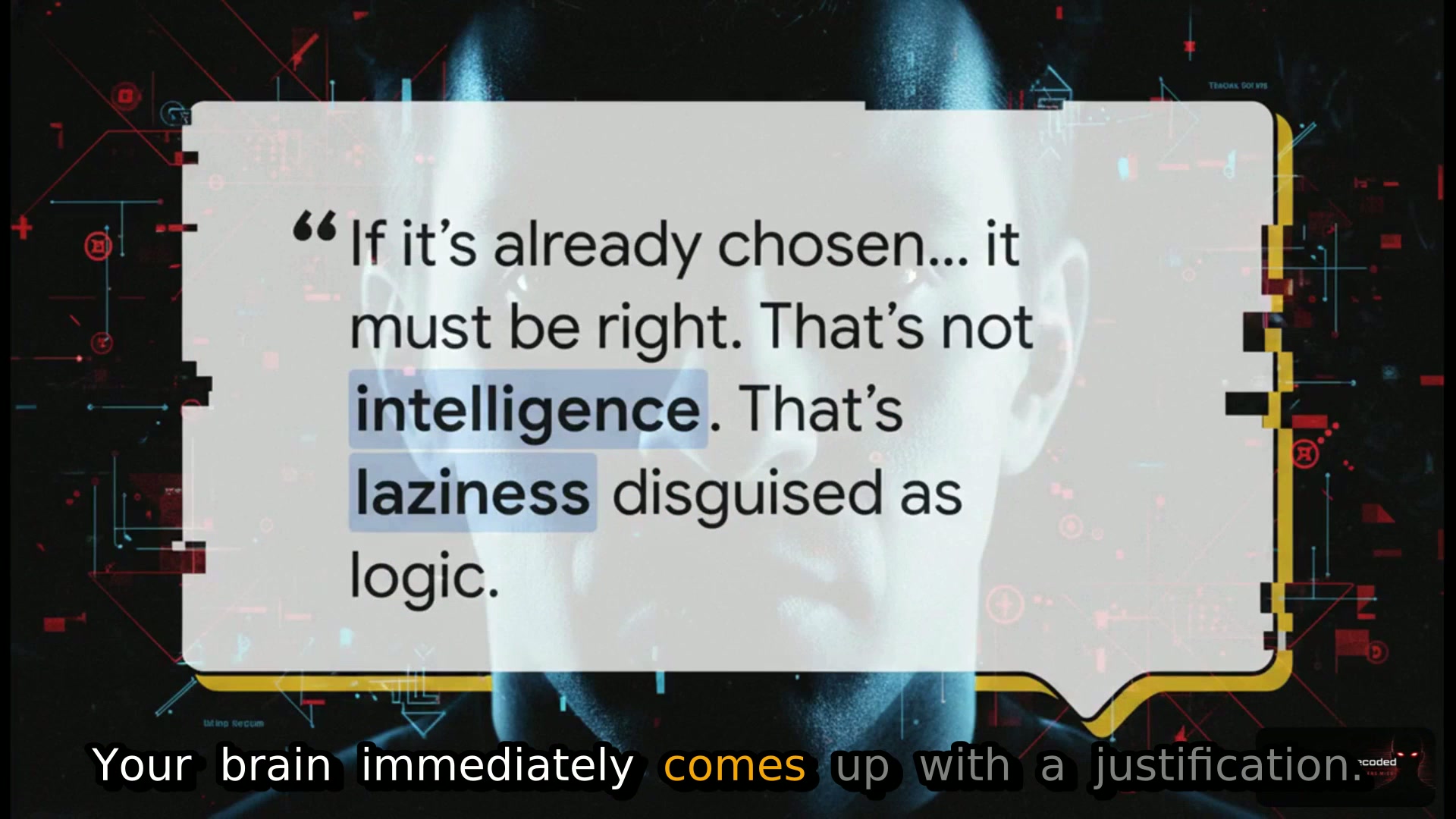
A default is the option that takes effect when you do nothing. It may be a pre-ticked marketing box, an automatically renewed subscription, the recommended privacy setting or the pension contribution chosen by an employer. Defaults are valuable because they reduce friction. They also carry an unspoken message: someone has decided this is the normal option.
Changing a default requires attention, effort and a small act of responsibility. Keeping it feels passive and safe. We may assume the designer knows more, that most people accept the setting or that deviating will create a hidden cost. In reality, a default may serve the organisation that designed the choice rather than the person making it.
Ask three questions whenever an important option is preselected. Who chose this default? Whose interests does it serve? What would I choose if every option started blank? This is especially useful for recurring payments, data sharing, insurance extras and workplace benefits. Do not reject defaults automatically; make them earn their place.
2. The social-proof illusion: “Everyone else is doing it”
When the correct action is unclear, other people become information. A busy restaurant probably serves acceptable food. A widely used tool is more likely to be supported. In unfamiliar or dangerous situations, following the group can be efficient and protective.
But popularity is evidence of popularity—not necessarily quality, truth or suitability. Online, the crowd you see is curated. Rankings can be influenced by advertising, early advantages and recommendation systems. Reviews can be fake. A visible majority may exclude the quiet people who left, refused or never saw the offer.
Social proof becomes strongest when you feel uncertain, rushed or socially exposed. “Ten people are viewing this room” does not tell you whether it is good value. “Most users choose this plan” does not reveal whether it fits your needs. Translate the number into a more useful question: What independent evidence supports the choice?
Social comparison adds another layer. We judge our progress against the visible achievements of peers and strangers. Yet the comparison set is rarely neutral: feeds amplify exceptional bodies, careers, relationships and lifestyles. A useful comparison should clarify your next action, not merely create anxiety.
3. Loss aversion: why losing hurts more than winning helps
People often give potential losses greater weight than equivalent gains. That tendency, central to prospect theory, helps explain why we hold on to possessions, investments, plans and relationships after the original reasons have weakened. Giving something up feels like moving backwards; continuing allows us to postpone that feeling.
This is not always irrational. Losses can have serious practical consequences. The trap appears when fear of losing the past prevents an honest evaluation of the future. Money already spent cannot be recovered by spending more. Time already invested cannot be rescued by investing another year in a path that no longer works.
Try the clean-slate question: If I did not already own this, belong to this or invest in this, would I choose it today at its current cost? Then compare the cost of leaving with the cost of staying. Loss aversion focuses attention on what departure removes; better judgment also counts what continued commitment may consume.
4. Confirmation bias: looking for proof, not truth
Once we form a belief, we do not approach every new fact as a neutral judge. We notice, seek and remember information that fits the belief more easily. Contradictory evidence receives more scrutiny: perhaps the source is biased, the example is unusual or the critic misunderstood. Supporting evidence feels reassuring, so it can seem more credible than it is.
Algorithms can deepen the pattern by learning what keeps us engaged. If angry political content wins your attention, more of it may appear. If you repeatedly watch videos about a feared health symptom, the feed can make that symptom feel unusually common. The system need not agree with you; it only needs to predict what you will continue watching.
The strongest defence is not simply “be open-minded.” Use a test. Write down what evidence would change your view before searching. Look for the best opposing case, not the weakest. Ask a person independent of the outcome to identify what you may have missed. If no possible evidence could alter the conclusion, you are defending an identity, not evaluating a claim.
Apply the same standard to information you like and information you dislike. Check the original source, sample, date and context. A screenshot, dramatic anecdote or confident speaker can start an investigation; none should end it.
5. The scarcity illusion: “Act now or lose it”
Scarcity increases attention. Limited supply can signal value, and a real deadline can make delay costly. That is precisely why scarcity is so easy to weaponise. Countdown timers, “only two left,” expiring bonuses and one-time opportunities compress the space in which comparison and reflection could occur.
The US Federal Trade Commission has documented digital “dark patterns,” including baseless countdown timers and false limited-time messages. The pressure works even when we recognise the tactic because the emotional question—What if I miss out?—arrives faster than the factual one: Is the deadline real?
Separate scarcity of the offer from value of the offer. A bad deal does not improve because it expires. Ask whether the timer resets, whether the same promotion ran yesterday, whether the seller gives a verifiable deadline and what substitute options exist. If a company prevents you from checking, treat the pressure itself as information.
For major purchases, create your own rule before entering the situation: no same-day decision, no deposit before seeing the full terms, no financial commitment without independent comparison. A precommitment protects your future self from a carefully engineered moment of urgency.
A trap is most powerful when it feels like your own spontaneous decision. Awareness creates the pause in which a real choice becomes possible.
Why these traps work together
The five traps rarely appear alone. Imagine a subscription page with the expensive plan preselected. A badge says it is the “most popular” choice. The discount is framed as money you will lose if you wait. Testimonials confirm that smart customers love it. A timer counts down. Each cue supports the next, and the combined pressure feels like certainty.
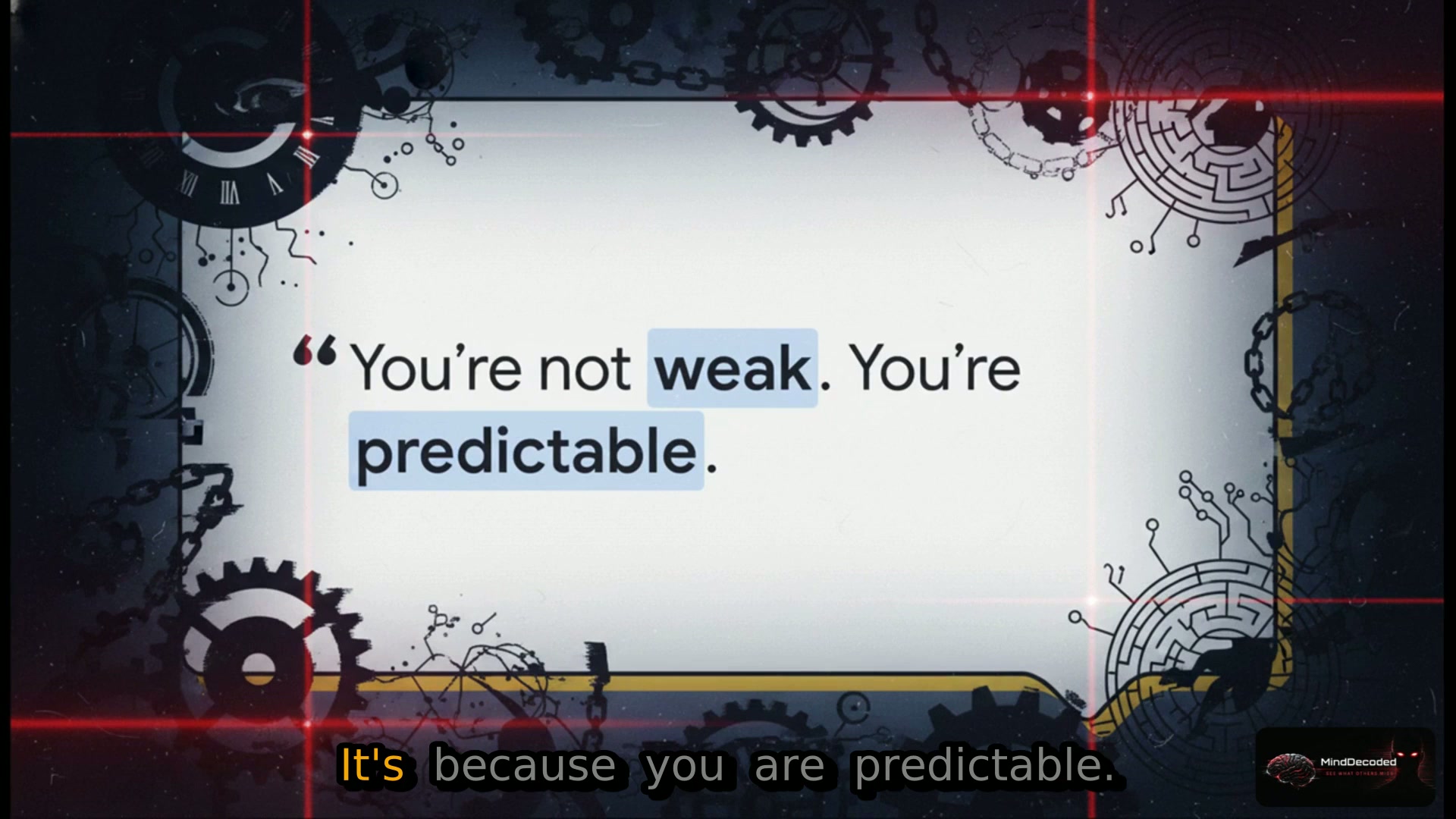
The deeper engine is predictability. Human attention is limited. We use shortcuts because checking everything would make ordinary life impossible. Designers, marketers and manipulative individuals can anticipate these shortcuts and arrange the environment around them. Yet influence is not absolute control. Context changes behaviour, and changing the context can restore choice.
That is why “trust your gut” and “ignore your feelings” are both incomplete advice. Intuition contains experience, but also bias. Emotion carries information, but not always information about the current decision. Ask what the feeling is responding to before obeying it.
The six-step pause protocol
1. Name the trigger
Say what is happening in plain language: “The option is preselected,” “I am following the crowd,” “I am afraid to lose what I invested,” “I want this evidence to be true,” or “The deadline is making me rush.” Naming the mechanism reduces its invisibility.
2. Find the real deadline
Ask when the choice genuinely must be made and what happens if you wait. Urgency often dissolves when converted from a feeling into a date and a consequence.
3. Separate facts from predictions
Write two short lists. Facts are verifiable: price, contract length, cancellation terms, observed behaviour. Predictions are stories about what might happen. Both matter, but they should not be confused.
4. Generate alternatives
A choice between “yes” and “lose everything” is usually an engineered frame. Add at least two options: wait, reduce the commitment, choose a substitute, ask for written terms or walk away.
5. Search against yourself
Ask, “What would prove me wrong?” and search for that evidence. Read a credible critical review. Check the base rate, not only the exceptional story. Look beyond the first page or recommended feed.
6. Protect high-stakes decisions
The more expensive, irreversible or emotionally charged the choice, the more distance it deserves. Sleep on it. Discuss it with someone who gains nothing from your answer. If another person punishes you for requesting time, that reaction is additional evidence.
Better decisions are designed, not willed into existence
Self-awareness helps, but environment often wins. Remove saved payment details from sites where you overspend. Turn off non-essential notifications. Decide your budget before opening a shopping app. Use automatic saving when the beneficial default serves you. Curate feeds that challenge rather than merely confirm you.
This is the hopeful side of predictable behaviour: the same principles can protect you. A well-chosen default can support retirement savings. Honest social proof can reveal a safer norm. A cooling-off period can weaken artificial scarcity. A written decision rule can speak for you when pressure makes clear thinking difficult.
You will still make imperfect choices. Everyone does. The goal is not total immunity or endless analysis. It is to recognise the decisions that deserve a second look—and to create enough space between the trigger and the response for your values to re-enter the room.
Watch the original video
See MindDecoded’s visual breakdown of the five psychological traps and the predictable engine that makes them effective.
Watch on YouTube ▶Frequently asked questions
What is a psychological trap?
A psychological trap is a predictable thinking shortcut or emotional tendency that can distort a decision. It is not a diagnosis and does not mean a person is unintelligent. Shortcuts save time, but can mislead us when the context changes or someone deliberately exploits them.
What are the five traps in this article?
The five are the default effect, social proof, loss aversion, confirmation bias and the scarcity effect. They make the preselected, popular, familiar, reassuring or limited option feel safer than it may actually be.
Can cognitive biases be eliminated?
Probably not completely. Biases are part of ordinary human cognition. The practical goal is to notice high-risk moments, slow important decisions, seek disconfirming evidence and design environments that make careful choice easier.
How can I make a better decision under pressure?
Pause, state the real deadline, list facts separately from feelings, generate at least two alternatives and ask what evidence would change your mind. For expensive or irreversible choices, sleep on it and seek an independent second opinion.
Research and further reading
Note: This article provides general psychological education. A cognitive bias is not proof that another person is deliberately manipulating you, and this content is not a mental-health diagnosis or a substitute for professional advice.